
Whitepapers

ADVANCE ACT: A Practical Path Forward for Nuclear Innovation
This paper outlines a blueprint for leveraging the ADVANCE Act of 2024 to accelerate nuclear deployment through a Joint Generic Plant Design Project. It calls for modernizing a proven 1960s-era reactor design, applying Part 53 risk-informed regulation, and securing pre-approval to drastically reduce licensing time. The approach strengthens supply chains, expands collaboration between DOE, NRC, private developers, and ASME, and positions the U.S. to deploy safe, low-cost reactors quickly and at scale.

Revitalizing Amercia's Nuclear Future: Lessons Learned in History and Steps Foward
This whitepaper explains how the U.S. nuclear industry declined—driven not by technology, but by regulatory overreach and ineffective industry responses. It traces the shift from the AEC’s balanced promote-and-regulate mandate to the NRC’s one-directional regulatory environment, which dramatically increased plant cost and complexity. The paper proposes a practical revival strategy focused on modernizing proven reactor designs, streamlining regulation, and building coordinated public-private partnerships to enable rapid deployment.

An Autopsy of Nuclear Power: Examining the Industry's Decline
This paper dissects the long-term economic, regulatory, and structural forces that led to nuclear power's collapse in the U.S., showing that Three Mile Island was a final blow—not the root cause. It details the AEC’s dual mandate, escalating safety requirements, rising construction timelines, interest-rate pressures, and the NRC’s regulatory intensification. The analysis concludes that nuclear’s decline was systemic and warns that revival requires learning from the past.

MVP: A Product Development Approach to Nuclear Industry Revitalization
This whitepaper applies the “Minimum Viable Product” concept to nuclear energy, arguing that the industry must stop chasing breakthroughs and instead prove it can build a simple, modernized plant today. By basing an MVP plant on proven PWR technology and emphasizing containment strength, streamlined regulation, and practical sizing, the industry can restore credibility and momentum. It is a call to action: stop promising—start building.

Leveraging Conventional Power Supply Chains for Nuclear Energy
This paper explains how nuclear costs soared when the industry shifted from conventional power-plant components to uniquely nuclear, ASME Section III–dominated supply chains. Using a risk-informed design philosophy focused on containment robustness, nuclear plants can safely incorporate more conventional components—reducing cost, shortening lead times, and improving scalability. The approach requires early-stage design choices aligned with PRA insights and regulatory flexibility.
Nuclear Waste: A Pragmatic Approach to a Manageable Challenge
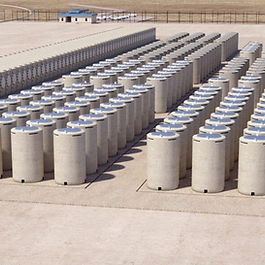
Despite its reputation, nuclear waste is a manageable issue with well-proven short-term solutions such as wet storage and dry cask storage. This paper explains why waste volumes are small, why proliferation fears are often misunderstood, and how industry-led innovation—such as reprocessing and advanced reactors—can turn waste into a future asset. It argues that the focus should first be on rebuilding the nuclear sector while maintaining safe, effective interim waste management.

Balancing Core Damage Frequency and Containmnet Robustness in Modern Safety Cases
For decades, nuclear regulation has pushed CDF (Core Damage Frequency) to extremely low thresholds while simultaneously requiring very robust containment—creating unnecessary cost and complexity. This whitepaper argues for a balanced, risk-informed regulatory framework that recognizes containment as a powerful safety tool and allows CDF to be governed partly by economic self-interest. The result is improved innovation, reduced barriers, and preserved public safety.